Bringing mobile number management into Carrier Automate
Sole designer on Dstny's telecom products. I took Carrier Automate from handling fixed numbers only to also managing mobile numbers.
- B2B
- Platform
- Dstny
- Role
- Lead Product Designer
- Period
- Nov 2022 – present
- Team
- Sole designer, working with 2 PMs and 4 engineers across Dstny's telecom products
- Read
- 3 min
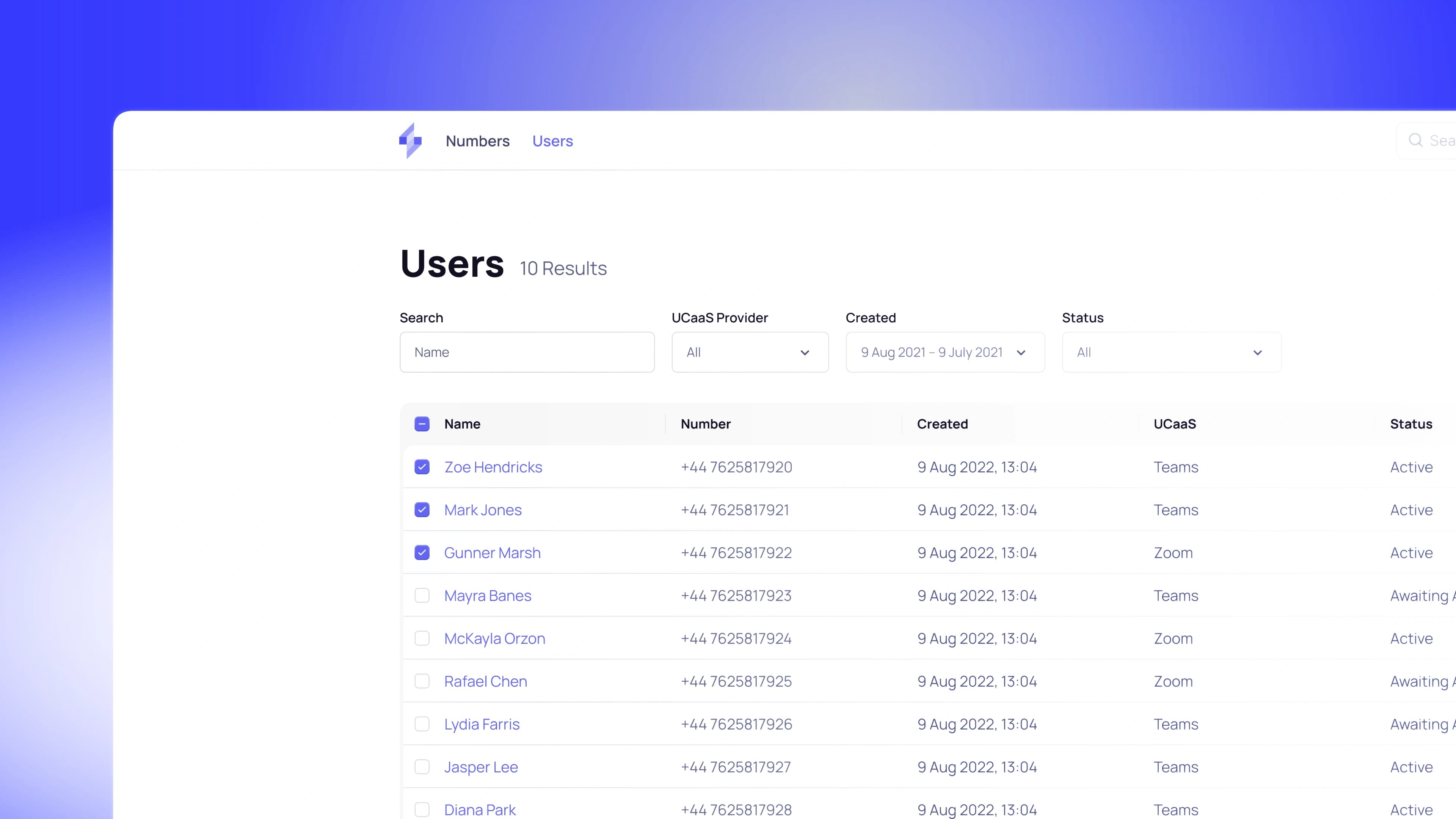
Carrier Automate sits underneath Call2Teams, which connects a business's existing phone system to Microsoft Teams.
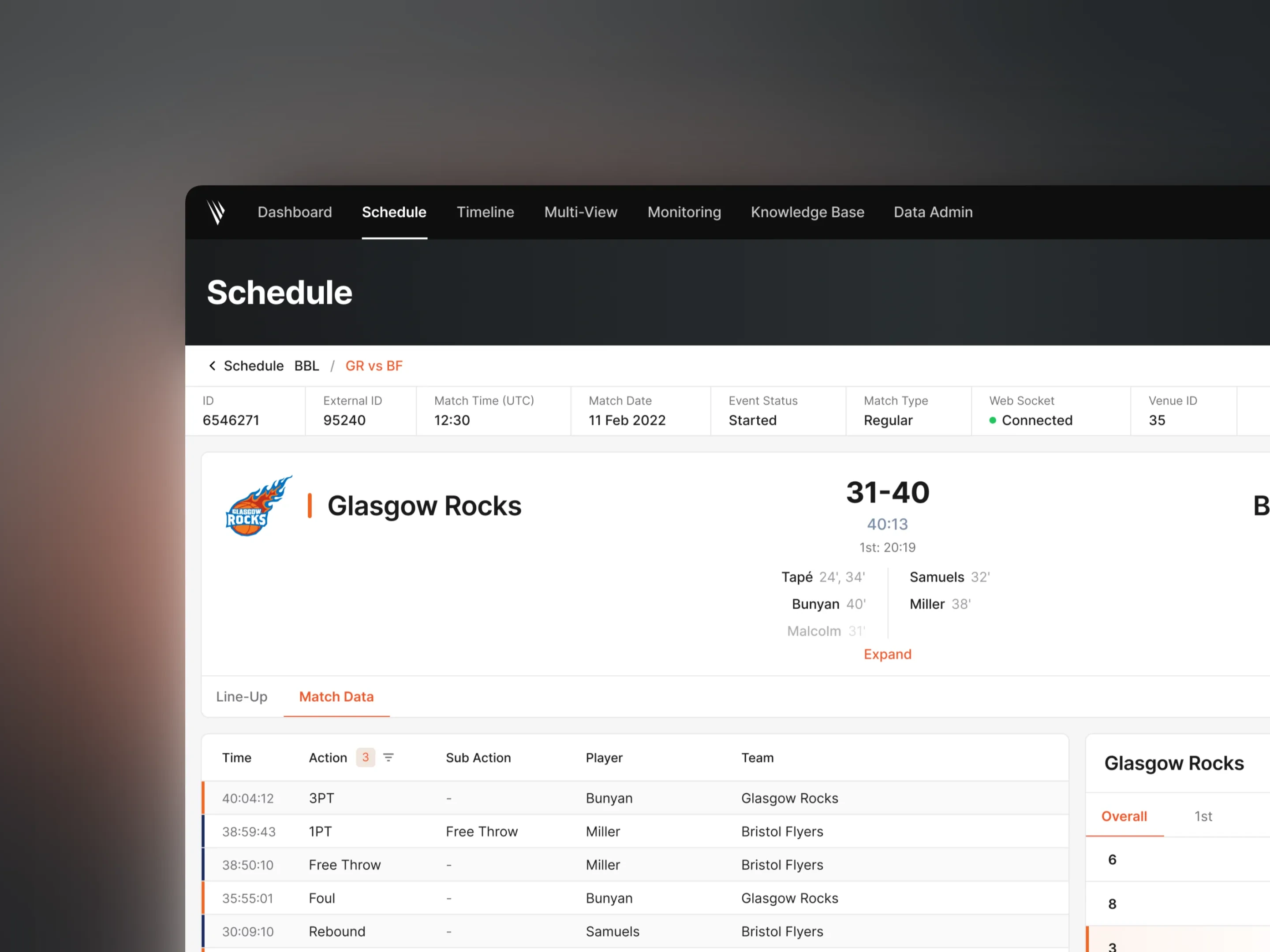
The piece of work here is Converge, on Carrier Automate. It took the product from handling fixed numbers only, supplied by a third party, to also managing users and their mobile numbers.
ContextLink to this section: Context
Dstny is mostly a B2B business. Its customers are telecom service providers, and its products are what those providers run and sell on to their own business customers.
Call2Teams connects a business's existing phone system to Microsoft Teams, either through their own PBX, through Microsoft's Operator Connect, or through a dedicated SIM. Carrier Automate sits underneath it.
Every screen on this page is redacted at the company's request. Customer names, data and identifying detail are blurred or replaced. No unredacted product UI appears here.
The problemLink to this section: The problem
I was the first designer to look at Call2Teams, which Carrier Automate sits underneath. There were no Figma files. The company design system had never been applied to it. There was no design way of working to inherit: no handoff, no review, nothing.
So the first job was not a redesign, it was finding out what was actually there. I did the UX mapping, the user flows and the sitemap, and subsequently reviewed the product as a whole to work out where it could be improved. That is where the evidence in this case study comes from. The Call2Teams product manager and I set up the design ways of working alongside it, from scratch.
ConstraintsLink to this section: Constraints
There was no analytics platform, so every argument I made for design had to be made on reasoning rather than on measurement. That gap mattered less here than it did on ConnectMe: Carrier Automate is platform infrastructure rather than something a service provider logs into directly, so adoption was always going to be a harder thing to point at, analytics or not.
What I exploredLink to this section: What I explored
What I shippedLink to this section: What I shipped
Converge, on Carrier Automate. It took the product from handling fixed numbers only, supplied by a third party, to also managing users and their mobile numbers.
What happenedLink to this section: What happened
Uptake is early, so this is the start of its life rather than a verdict on it.`
What changed is what the product is for. Carrier Automate handled fixed numbers, supplied by a third party. It now handles users and the mobile numbers attached to them, which is how a service provider thinks about a customer in the first place. Someone joins, someone leaves, someone changes number. Those are the things a provider does all day, and the product now works the way that job does.
It also puts fixed and mobile in one place. Provisioning meant working across two systems and now it does not. For the service providers it opens up a mobile offer they could not support at all before, which is the reason the work was funded.